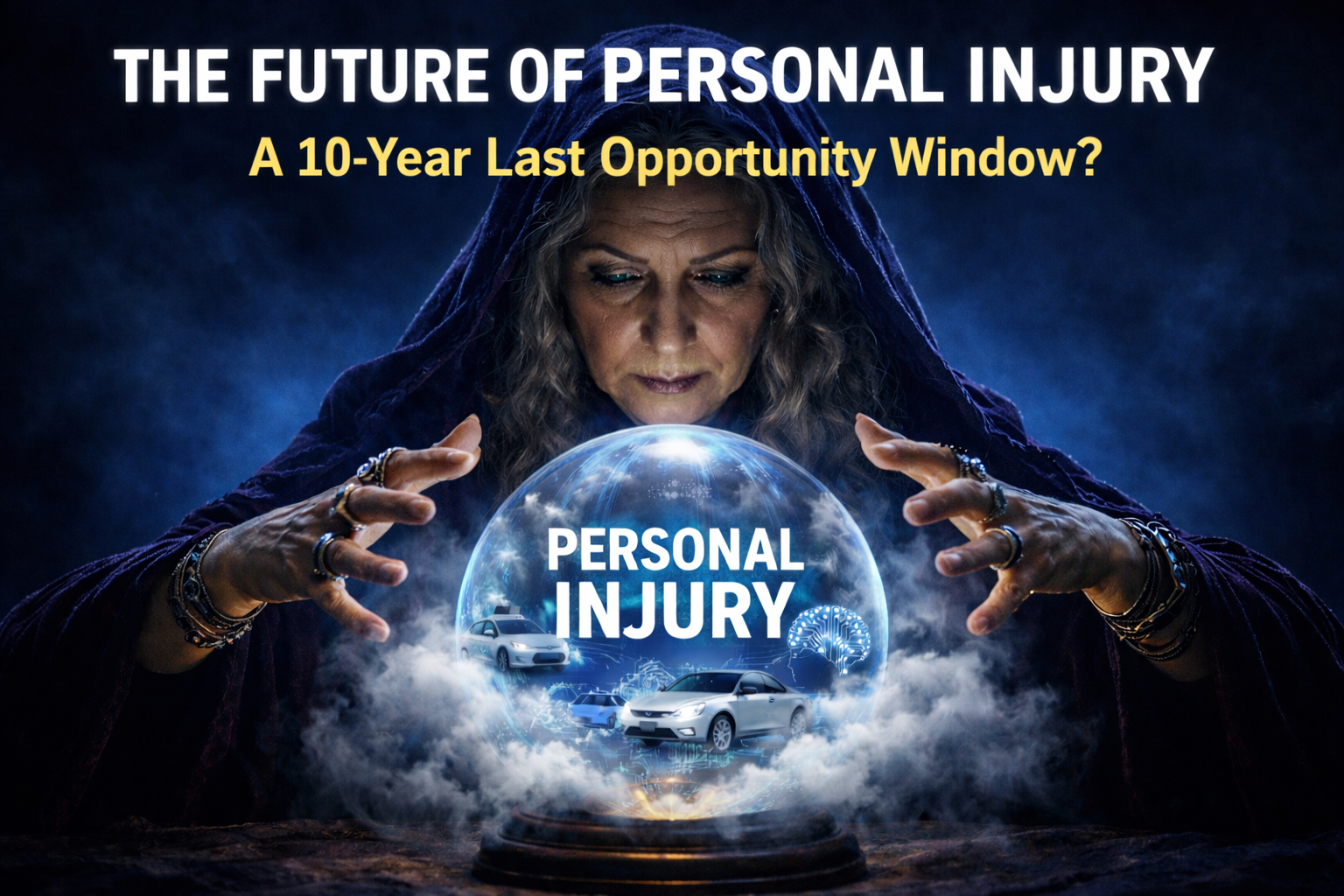
This 2-Minute Monday Personal Injury Mindset for Medical Offices is around the positives and negatives of artificial intelligence, otherwise known as “AI”
Beware of Reliance of AI in PI
Let’s talk about artificial intelligence, or “AI”, in personal injury – for both attorneys and medical providers.
AI is powerful. It’s fast. It saves time.
And right now, it’s also dangerous if you trust it blindly.
AI today is like Ronald Reagan with his Cold War Mantra with the Russians in the 80s about nuclear disarmament: “Trust but Verify.”
Because if you don’t verify, you’re risking.
And with AI that’s the risk of hallucinations, errors and professional landmines.
We just saw it play out publicly.
A national law firm was hammered by a judge for AI-reliant briefs – fake citations, misstatements, unverified research.
The judge called it “unethical” and “corrosive” to trust AI. The warning shot was loud.
And many attorneys have been fined and their licenses to practice placed at risk.
And let’s be honest – medical offices are next, if not already there.
AI-generated documentation, treatment summaries, diagnosis listings, causation language — amazing tools, until you don’t check and verify what AI wrote.
Word substitutions that change diagnosis or treatment, additions that are flat out wrong and if relied upon could lead to mistreatment.
Danger, danger, danger … if not verified.
Here’s the point: Use AI. You must. AI is here to stay and help.
But huge time savings don’t excuse professional negligence.
Not in your actions, or your inactions.
And this isn’t about just AI in PI. It’s about AI in medicine and medi-legal overall.
AI won’t be blamed when things go wrong. You will.
So use it. Leverage it. But beware of AI in PI and your medical practice overall.
Just learn to follow Ronald Reagan when it comes to AI: Trust, but verify!