

THE GREAT BETRAYAL – Part 9: To Be Fair… The Strongest Arguments Supporting SB 623

Every significant piece of legislation starts with a problem to solve. Before evaluating California’s SB 623, healthcare providers must understand why policymakers, insurers, and consumer advocates pushed for reform. In Part 9, Michael Coates, Esq. examines the strongest arguments supporting SB 623—from transparency and patient protection to benchmark pricing—and explores how to balance systemic abuse prevention with preserving quality patient access.
THE GREAT BETRAYAL – Part 8: Today It’s California… Tomorrow It Could Be Your State

Is California’s SB 623 just a localized rideshare law, or a blueprint for national tort reform? In Part 8, attorney Michael Coates exposes how fast-tracked legislation in one state often becomes a roadmap for the rest of the country—and why medical providers in every state must pay attention before it hits their front door.
THE GREAT BETRAYAL – Part 7: The Real Victim of SB 623 May Be the Patient

What happens to injured personal injury patients who don’t have health insurance if providers can no longer afford the financial risk of lien-based care? In Part 7 of The Great Betrayal, Michael Coates, Esq. unpacks the hidden economic and biopsychosocial costs of SB 623—and why the ultimate victim of healthcare reform may be the patient.
Protect Your Medical Practice from the Evolving Healthcare Storm
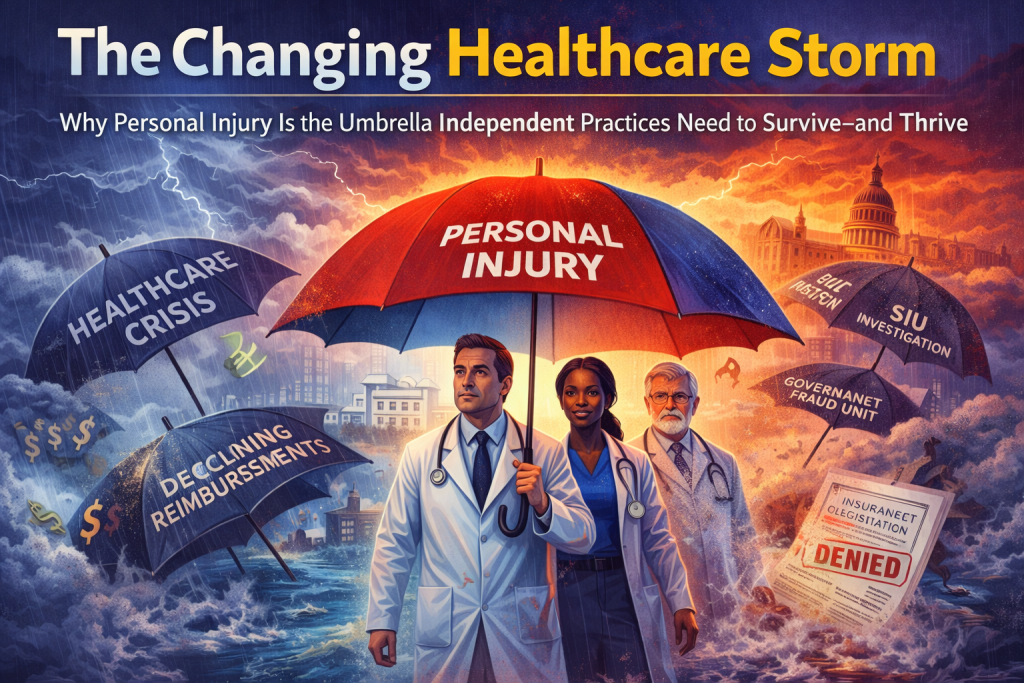
Independent medical practices are facing a perfect storm of declining insurance reimbursements, rising costs, and aggressive audits. Discover why structured, compliant Personal Injury (PI) is no longer just an optional side-revenue stream, but the ultimate umbrella for protecting your autonomy and thriving in today’s healthcare climate.
Personal Injury (PI) is an Industry of Professional Pushback
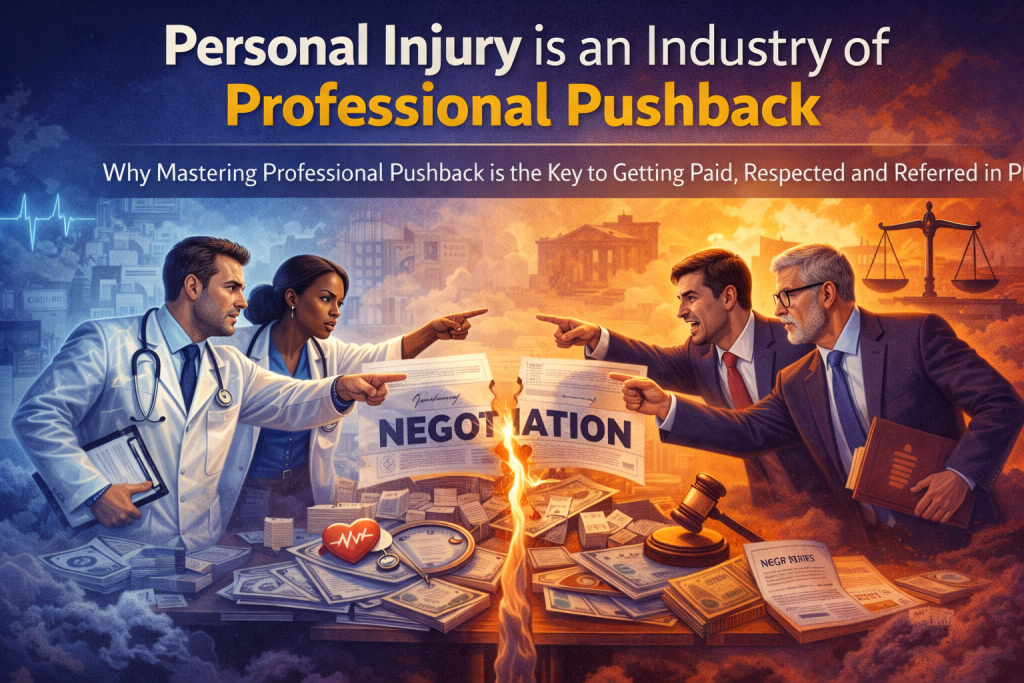
In the personal injury industry, conflict isn’t a flaw—it’s a feature. While medical offices are wired to heal, law firms are trained to argue. Discover why avoiding disagreement is costing your practice, and how mastering the art of “professional pushback” is the ultimate key to maximizing your ROI, earning attorney respect, and securing long-term referrals.
Don’t Let Time be a Profit Thief
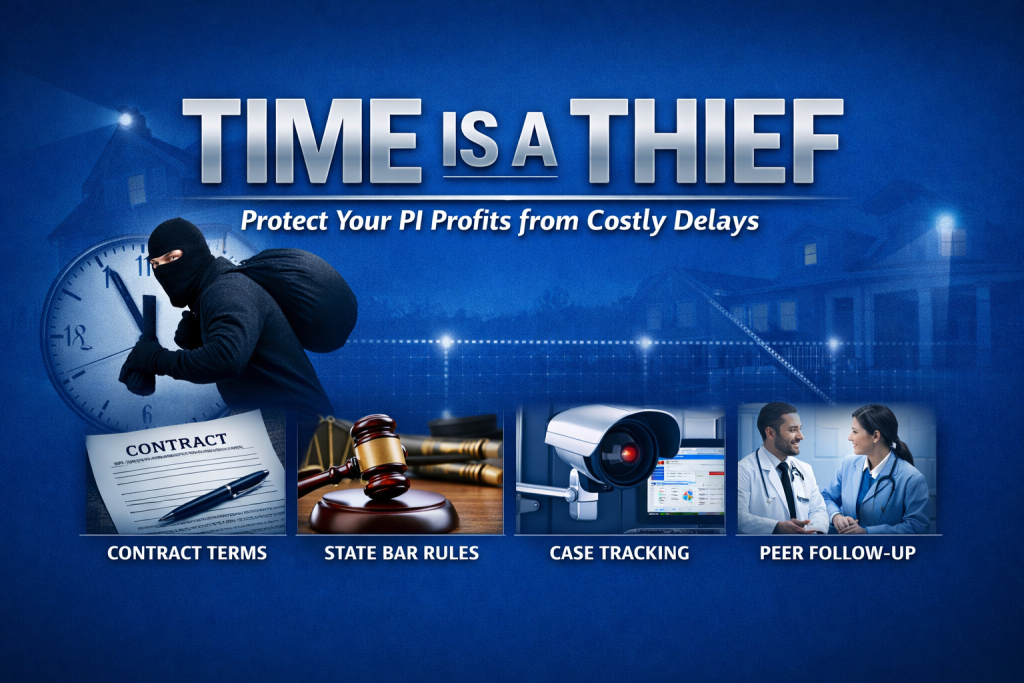
In personal injury, time is a thief operating in plain sight. It doesn’t break windows, but it quietly steals your profits through administrative delays and missed milestones. Learn how to protect your practice using four essential security measures—contracts, state bar rules, proactive tracking, and peer networks—to stop the theft and secure the revenue you’ve earned.
The PI Pivot
Traditional healthcare is flooding practices with crisis. The path to financial hope and stability is the Personal Injury (PI) segment. PI is the most misunderstood, yet financially rewarding, niche in medicine. In PI, your documentation and expertise directly influence higher financial outcomes, granting you the leverage and respect you deserve. Stop fearing PI—it’s time to make The PI Pivot.
Think Ahead So You Don’t Come Out Behind in Your Personal Injury Segment

In personal injury medicine, most problems start small and go unmanaged. Success does not reward the reactive; it rewards the prepared. The true edge in your PI segment is about thinking ahead from using protective lien agreements to pre training your staff so you do not come out behind financially or operationally.
Turn Battles into Bridges: Slay the Medical Bill Payment Problem, not the Law Firm

Tired of fighting with law firms over medical bill payments? Stop making the law firm your enemy. Learn how to reframe conflict into collaboration and control the negotiation to get paid fairly without destroying professional relationships.
How to Crack the Law Firm Dam and Make That PI Money Flow
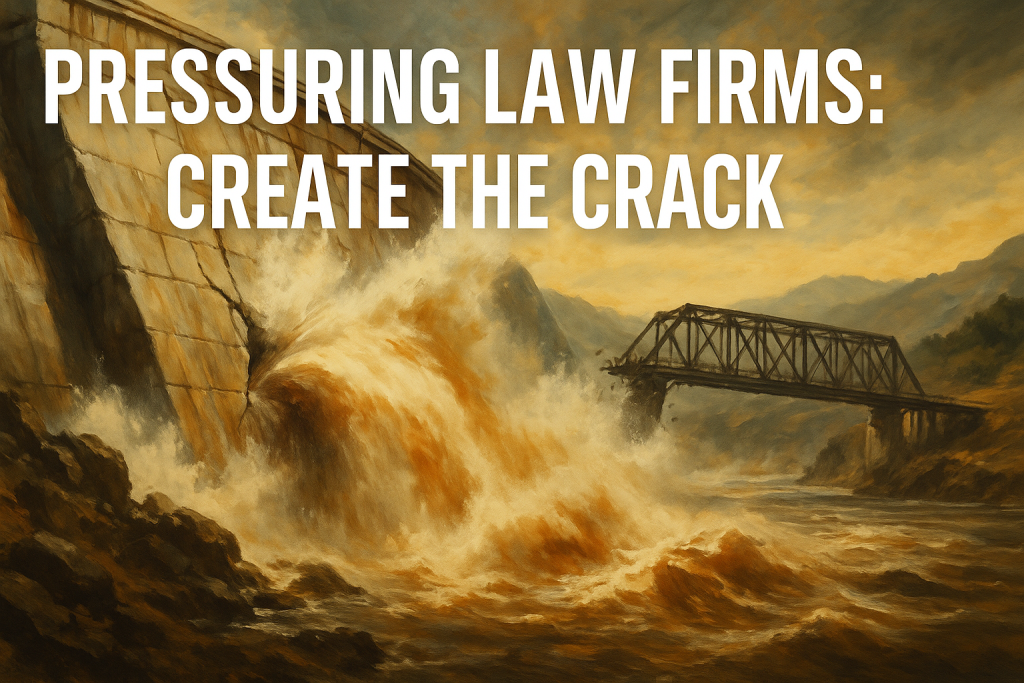
Struggling with lowball offers from law firms? Don’t match force with force. This guide reveals a tactical approach inspired by a classic movie, teaching medical offices how to use strategic leverage, not brute strength, to get paid what they’re owed. Learn how to find the “cracks” in a law firm’s defenses and let pressure—applied over time—do the rest.