

THE GREAT BETRAYAL – Final Chapter: From Debate to Direction
In the final chapter of The Great Betrayal, Michael Coates, Esq. outlines a strategic “surgical strike” approach to California’s SB 623. Discover how healthcare providers can move from defensive debates to leading the future of personal injury healthcare through ethical practice, targeted policy reform, and collaborative, patient-first care.
THE GREAT BETRAYAL – Part 9: To Be Fair… The Strongest Arguments Supporting SB 623

Every significant piece of legislation starts with a problem to solve. Before evaluating California’s SB 623, healthcare providers must understand why policymakers, insurers, and consumer advocates pushed for reform. In Part 9, Michael Coates, Esq. examines the strongest arguments supporting SB 623—from transparency and patient protection to benchmark pricing—and explores how to balance systemic abuse prevention with preserving quality patient access.
THE GREAT BETRAYAL – Part 7: The Real Victim of SB 623 May Be the Patient
What happens to injured personal injury patients who don’t have health insurance if providers can no longer afford the financial risk of lien-based care? In Part 7 of The Great Betrayal, Michael Coates, Esq. unpacks the hidden economic and biopsychosocial costs of SB 623—and why the ultimate victim of healthcare reform may be the patient.
THE GREAT BETRAYAL – Part 5: How SB 623 Decides What Your Healthcare Is Worth
California’s SB 623 caps recoverable medical expenses using FAIR Health’s 70th percentile benchmark. But who gets to decide what healthcare is actually worth? Michael Coates, Esq. breaks down what this shift means for providers.
THE GREAT BETRAYAL – Part 3: SB 623 Explained and 9 Changes Every Healthcare Provider Needs to Understand
SB 623 isn’t just about rideshare safety—it introduces sweeping shifts in medical billing caps, lien financing, discoverability, and provider liability. Michael Coates, Esq. breaks down the exact statutory language and the 9 critical changes every personal injury healthcare provider must understand before 2027.
Personal Injury (PI) is an Industry of Professional Pushback
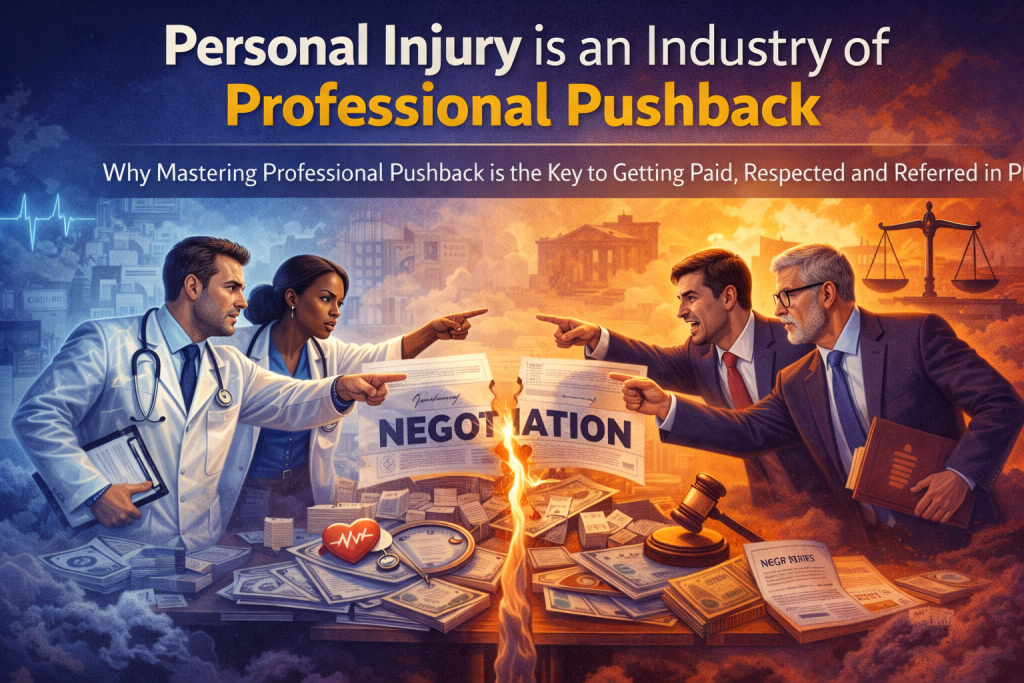
In the personal injury industry, conflict isn’t a flaw—it’s a feature. While medical offices are wired to heal, law firms are trained to argue. Discover why avoiding disagreement is costing your practice, and how mastering the art of “professional pushback” is the ultimate key to maximizing your ROI, earning attorney respect, and securing long-term referrals.
The Legal Ground Is Shifting Beneath Your Practice – Part 3
As recoverable dollars tighten, the legal frontier for medical practices is shifting directly to billing transparency. In Part 3 of our series, we break down the No Surprises Act (NSA), why compliance isn’t optional for personal injury practices, and how “continuous notice” is your best defense against federal enforcement.
Attorneys are Trained Narcissistic Assertives
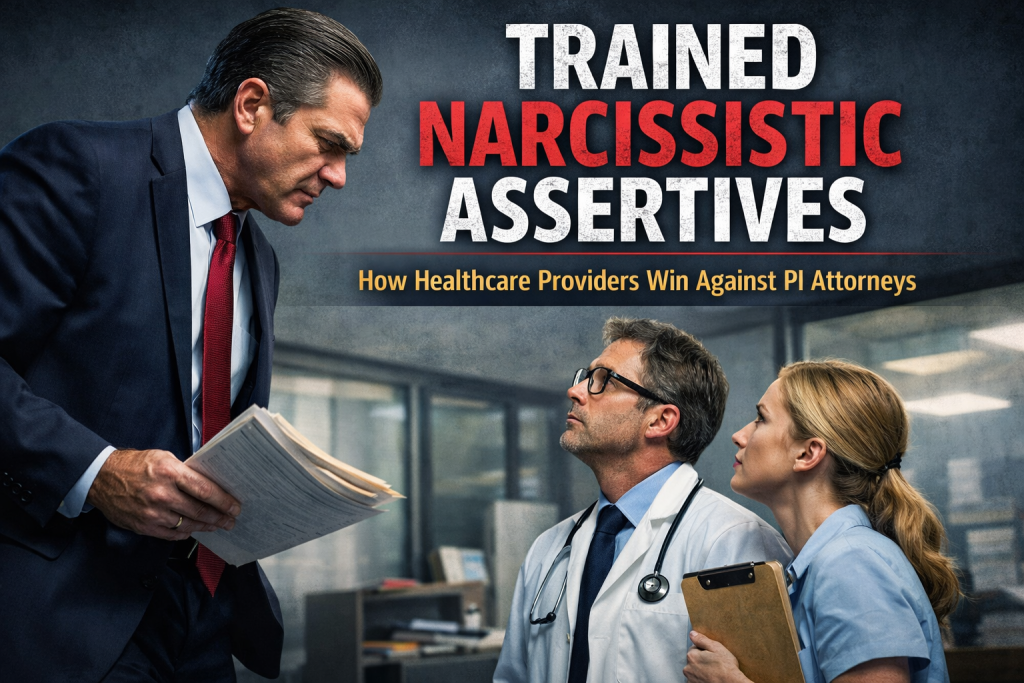
Personal injury attorneys aren’t just advocates—they’re trained narcissistic assertives who view healthcare providers as easy prey. Discover why trying to be “liked” by law firms is costing you money, and how to command the respect that gets you paid.
The Legal Ground Is Shifting Beneath Your Practice – Part 1
Medical practice risk is no longer just “tightening”—it’s restructuring. In Part 1 of our 2026 Legal Updates, we break down why HIPAA is now a living risk system, why Stark Law structure matters more than intent, and how corporate tort-reform strategies are shifting liability downstream. Is your practice prepared for the shift?
Personal Injury: Where the Biopsychosocial Model Comes Alive
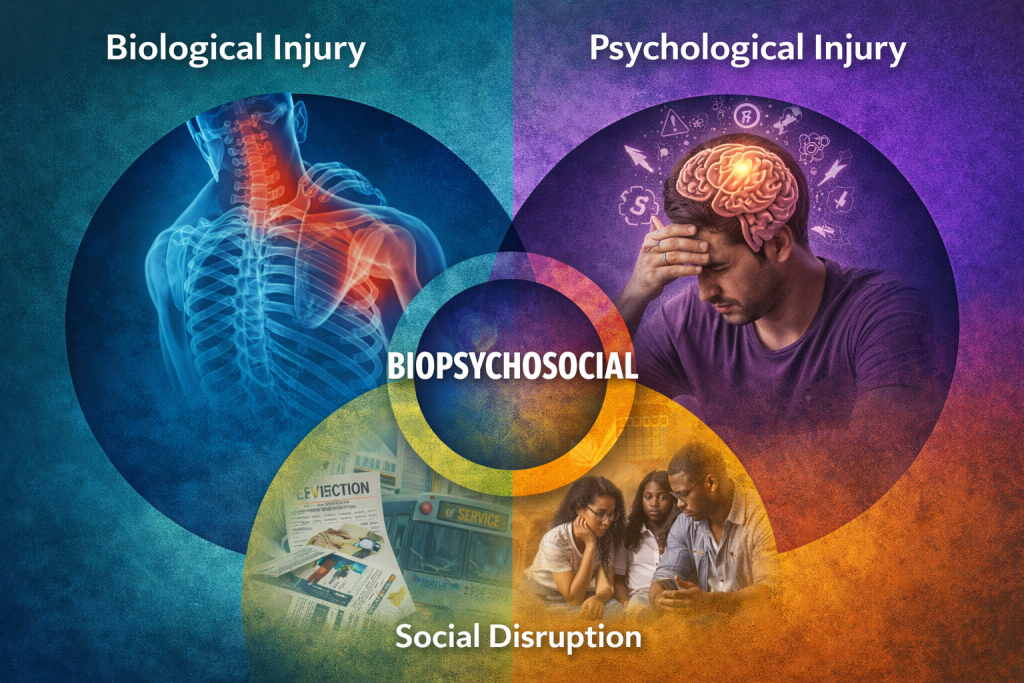
Personal injury care is more than just treating tissue damage. Discover why a biopsychosocial approach—addressing biological trauma, psychological shifts, and social disruption—is essential for better patient outcomes and bulletproof storytelling documentation. Stop treating “just the neck” and start treating the whole person to elevate your value as a PI specialist.