

How Medical Documentation Shapes Justice in Personal Injury

In the final part of our series, we show how your medical notes, your billing, and your professional integrity must merge into a single, consistent story. This is where your daily record-keeping can make or break a personal injury case, not just for your practice, but for your patient. Learn how to tie your SOAP notes, final assessments, and billing together to become the voice of reason and truth in a complex system.
How Medical Documentation Shapes Justice in Personal Injury
In personal injury cases, gaps in your medical documentation can create legal sinkholes. Defense attorneys use these omissions to undermine a patient’s case and question your credibility. Learn how to proactively fill in the blanks, turning perceived “delays” into compelling evidence that strengthens both your clinical record and your patient’s legal narrative.
How Medical Documentation Shapes Justice in Personal Injury
Medical documentation should tell a patient’s unique story, not just record numbers. This post explains how adding human details to your notes—like pre-existing conditions and personalized goals—can build a stronger, more credible case for a patient’s recovery.
How Medical Documentation Shapes Justice in Personal Injury
Your notes are more than just a clinical tool in a personal injury case—they’re evidence. Your documentation isn’t a side note; it’s the main event, shaping the financial outcome of the case. In this first part of a four-part series, we’ll walk you through five foundational practices that elevate your documentation from routine to legally powerful, helping you translate trauma into facts and support your patient’s journey toward justice.
Doing PI Right Starts with the Patient’s First Visit

Today, we’re diving into the patient’s first visit—a critical moment that determines your role in a personal injury (PI) case. It’s your launchpad to becoming a value driver. Learn how to gather crucial documentation, identify hidden issues, and avoid pitfalls. This initial encounter sets the foundation for your patient’s claim, legal strategy, and your payment rights.
Part 3 of 6: In the Trenches: Measuring Law Firm Results & Tendencies

In the third part of our six-part series on choosing attorneys, we move from assessing a firm’s surface and foundation to evaluating their actual performance. Discover how to measure results and identify key tendencies in MedPay/PIP handling, responsiveness, transparency, and overall track record to ensure you’re partnering with firms that deliver on their promises, not just their marketing.
Part 2 of 6: Beneath the Surface: Research Personal Injury Law Firms Like Restaurants

In Part 2 of our series on choosing personal injury law firms, we’re digging deeper than surface appearances. Learn how to research law firms like restaurants—inspecting their “menu” (website), checking their “health grade” (bar records), and reading “customer reviews” (third-party feedback) to avoid the bitter aftertaste of a bad legal relationship.
Self-Learning: The Ultimate PI Guidebook for Medical Providers
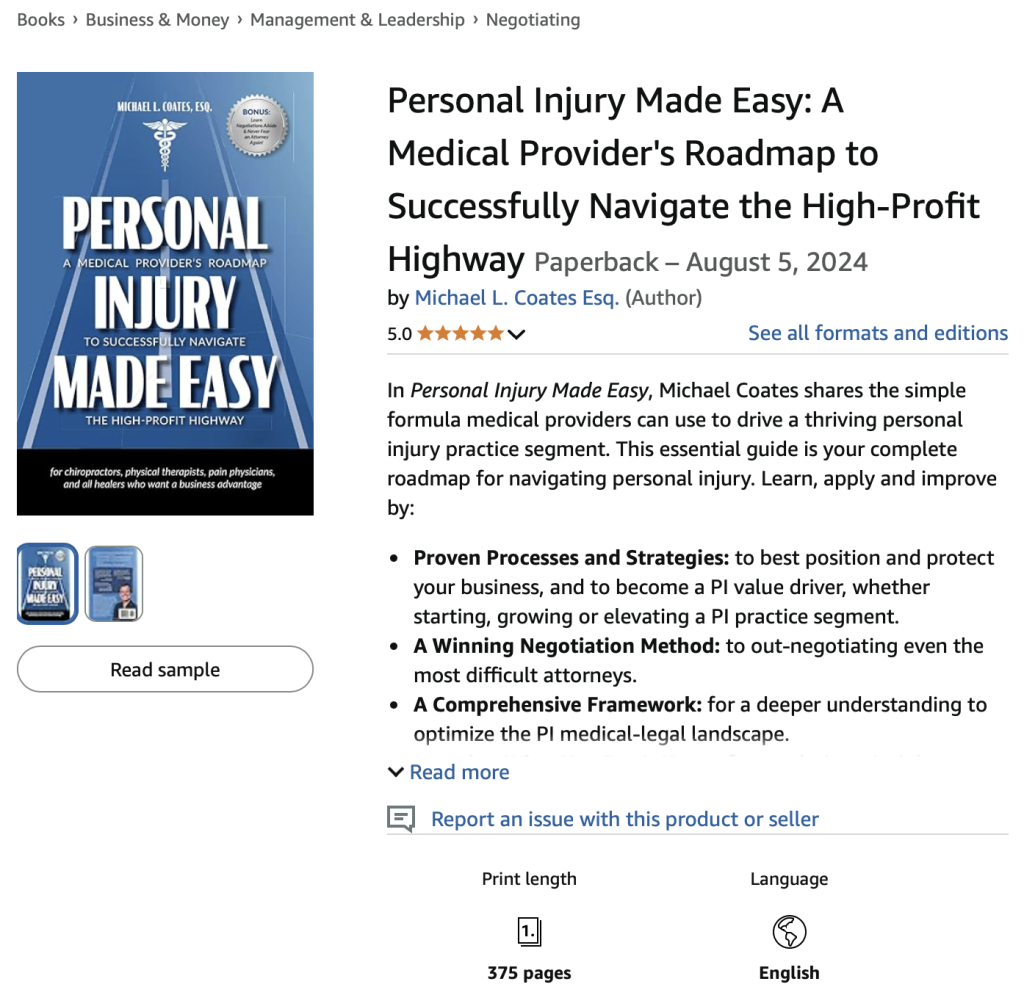
Discover the transformative power of self-learning, especially through books, to elevate your medical practice in personal injury. We delve into the critical need for a comprehensive guide and introduce “Personal Injury Made Easy,” your roadmap to mastering processes, profits, and sustainable growth.
Be a Personal Injury Value Driver, Not Just a Care Provider

At its core, personal injury (PI) cases are about determining fair compensation for harm caused by another. The evidence side of PI focuses on support (or contradiction) of either liability or damages.
Profits vs. Ethics in Personal Injury

Why do some providers in personal injury succumb to unethical practices for profit? We explore the pressures and the critical importance of doing what’s right.